This is the webpage for authors in the Encyclopedia of Postdigital Science and Education. The Encyclopedia addresses all major issues linked with postdigital science and education. The concept of the postdigital is inherently transdisciplinary so boundaries between the traditional disciplines are purposefully blurred.
All entries are published immediately upon acceptance. Once the project reaches ca 260 entries, they will be collated and published as a standalone book. Entries are approximately 2000 words in length. Longer entries are encouraged in consultation with the editor.
Author Instructions
The Encyclopedia of Postdigital Science and Education is aimed at a general readership. Our aim is to publish a work of tertiary literature, which provides summarized information derived from primary or secondary sources, rather than original research. Every entry should consist of established information in the particular field and contain digested knowledge in an easily accessible format. Please don’t use this article as an opportunity to publish (exclusively) your own scientific work (primary literature).
The level of contributions should be such that a graduate student can benefit from a contribution which is not from his or her area of expertise. Each contribution should stand on its own without an assumption that a reader will be seeing any other portion of the work. Please avoid colloquial language as well as unnecessary foreign terms. Explain all the acronyms and abbreviations you use in your contribution.
Project Background: History of the Postdigital: Invitation for Feedback (for those without access, mirror site)
Templates: Template for General Entries and Template for Biographical Entries
Things to do
• Entries should present an overview of existing knowledge and main sources about your theme. No original research!
• Used sources should be refereed. Primary sources should be prioritized. Non-refereed sources should be verifiable and accessible.
• All entries should be linked to existing postdigital literature.
• Writing should be simple and concise.
• All entries should contain: Who, What, Where, When, and Why.
• Entries should present facts in a formal and authoritative register.
• Entries should be written in a neutral manner. When presenting debates, all sides should be equally presented.
• Controversies should be identified as such.
Things to avoid
• Do not present results of original research.
• Do not use footnotes, endnotes, acknowledgments.
• Do not cite unpublished works.
• Do not use third- or more heading levels.
• Do not use the contribution’s title as a header for any part of the text.
• Do not use the first-person point of view (i.e., avoid using personal pronouns).
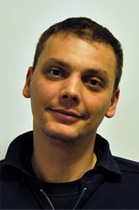 Petar Jandrić (PhD) is Professor and Director of BSc (Informatics) programme at the University of Applied Sciences in Zagreb (Croatia) and visiting Associate Professor at the University of Zagreb (Croatia). His research interests are focused to the intersections between critical pedagogy and information and communication technologies. Research methodologies of his choice are inter-, trans- and anti-disciplinarity. Petar's previous academic affiliations include Croatian Academic and Research Network, National e-Science Centre at the University of Edinburgh, Glasgow School of Art and Cass School of Education at the University of East London. He writes, edits and reviews books, articles, course modules and study guides, serves in editorial boards of scholarly journals and conferences, participates in diverse projects in Croatia and in the United Kingdom, regularly publishes popular science and talks in front of diverse audiences. His major current projects are focused to collaborative research and editing.
  TEACHING IN THE AGE OF COVID-19